
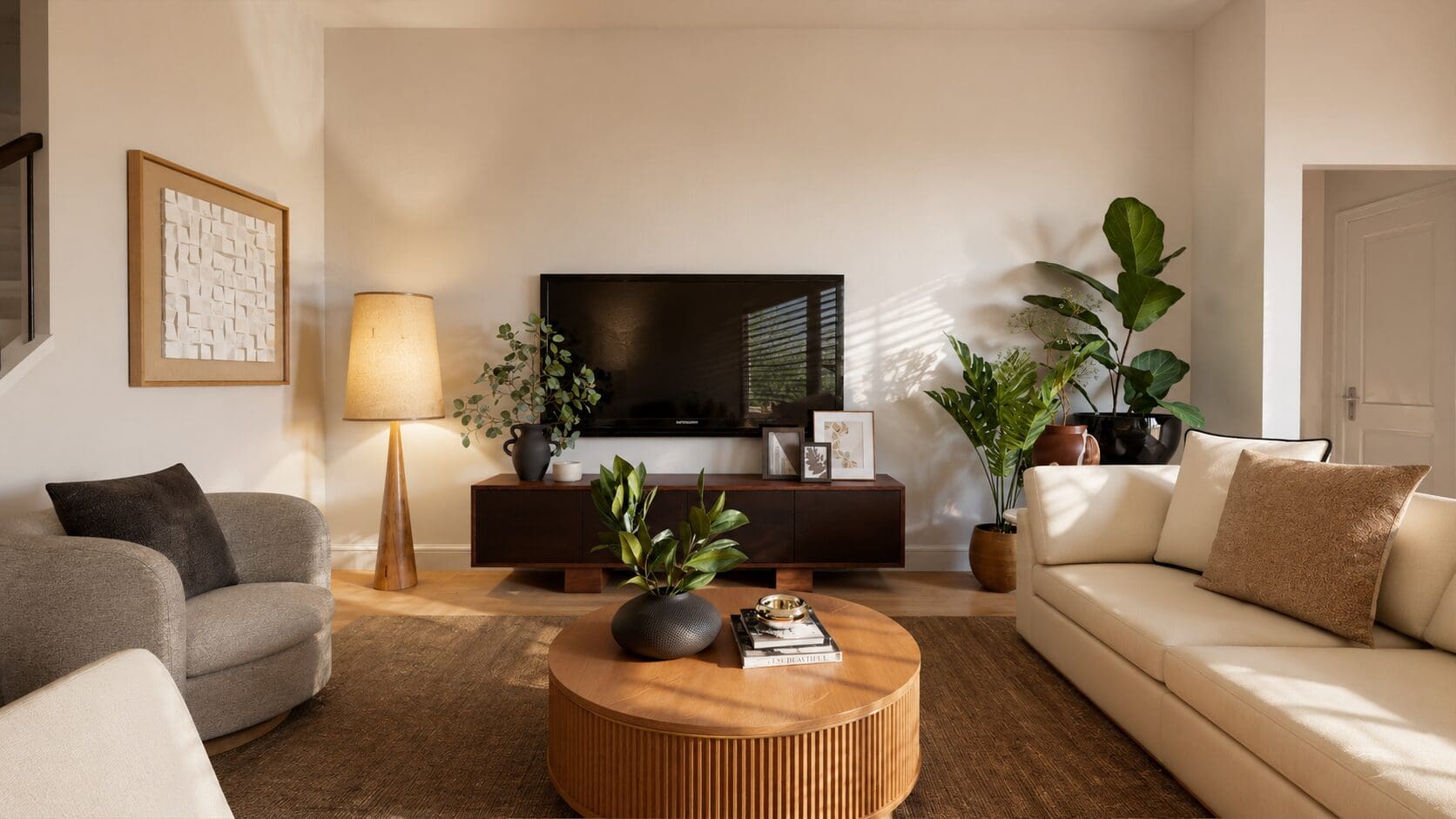
You’re ready to give your room a refresh. You’ve saved the inspiration, spotted a few cute pillows, and mentally repainted the walls at least three times. But when it comes to actually starting? Suddenly, even choosing a lampshade feels like a major life decision.
We get it! Decorating can feel overwhelming when you’re trying to figure out everything at once.
The good news? You don’t need to replace everything—or have every detail decided—to make progress. A little direction goes a long way. Before that very tempting accent chair finds its way into your cart, here’s how to give your room refresh a sensible starting point.
▪️ Give Your Room A Job Description
Before thinking about how you want the room to look, consider what you need it to do.
Is your living room the family movie headquarters? Does it double as your home office? Do you need seating for guests, a place to read, or somewhere to hide the toys before company arrives?
Make a short list of what’s working and what isn’t. Be specific: “This room feels off” is hard to solve. “There’s nowhere to put a drink, and the sofa blocks the walkway” gives you something to work with.
Start Here:📝 Choose your top three priorities. These will help you decide which changes deserve your attention—and your budget.
▪️ Shop Your Room Before Shopping The Internet
A refresh doesn’t have to begin with a receipt.
Take a look at what you already own. Which pieces do you love? Which ones are useful but need a new spot? And which are sticking around simply because they’ve always been there?
That chair in the bedroom might work beautifully by the living room window. A side table could become a nightstand. Your sofa might feel completely different once the surrounding clutter is gone.
Clear away a few accessories so you can see the furniture more clearly. Then decide what stays, what moves, and what you’re ready to replace.
Start Here: 🛋️ Pick one piece you want to keep and build around. An existing rug, favorite artwork, or comfortable sofa can give your refresh its first bit of direction.
▪️ Figure Out The Layout Before Falling In Love
That gorgeous coffee table becomes considerably less charming when you have to turn sideways to get past it.
Before buying furniture, measure your room, note the doors and windows, and think about how people move through the space. Include anything that affects placement, such as outlets, vents, and doors that swing open.
Then try rearranging what you have. Pull a chair closer to the sofa, move a bulky piece out of a walkway, or create a reading spot in an underused corner. Sometimes the room needs a better arrangement more than it needs new furniture.
Start Here: 💬 Use painter’s tape to mark the footprint of a potential purchase on the floor. Check the measurements, then walk around it. Your shins will appreciate the preview.
▪️ Pick A Direction—You Can Pick Paint Later
Here comes the fun part: deciding how you want your room to feel.
Choose a few words to guide you, such as warm, relaxed, and colorful or airy, simple, and inviting. Then gather a small collection of inspiration images that share those qualities.
Look for recurring colors, materials, and shapes. Maybe you keep saving rooms with warm wood, soft blues, and curved furniture. Those common threads are more useful than a folder filled with fifty completely different spaces.
Use them alongside the pieces you’re keeping to create a simple palette. And if you’re buying a rug or patterned upholstery, consider those selections before committing to a wall color.
Start Here: 🎨 Narrow your inspiration to three to five images. Once the main materials are settled, test paint samples in your actual room before reaching for the roller.
▪️ Give Your Budget A Pecking Order
It’s surprisingly easy to spend your refresh budget on little things and still be left with the big problem you started with. Six new candles won’t make an uncomfortable sofa more inviting.
Set an overall spending limit, then return to those three priorities from step one. Put the changes that solve everyday problems at the top of your list.
If the layout works but the room feels dark, lighting might come first. If the furniture is comfortable but storage is a constant struggle, a cabinet could make the biggest difference.
You can also refresh in stages. There’s no decorating referee handing out penalties for buying the rug this month and the curtains next month.
Start Here: 💸 Divide your list into “needed now” and “can wait.” Price the essentials before adding the extras.
▪️ Bring in the Finishing Touches
Once the layout and main pieces are working, you can give the room a little personality.
This is where the ideas from a simple budget refresh really shine: swap pillow covers while keeping your inserts, rearrange your bookshelf, bring in a plant suited to your light, or display something you already own in a new way.
Style gradually. A shelf doesn’t need to be filled in one shopping trip, and every empty corner doesn’t require a purchase. Leave room for the pieces you’ll discover—and love—over time.
Start Here: 🌿Finish one small area, such as your sofa or bookshelf, then step back. Seeing a completed spot can help you decide what the rest of the room actually needs.
A Little Direction Goes a Long Way
Your room refresh doesn’t need to begin with a dramatic before-and-after moment. It can start with a measuring tape, a moved chair, or an honest admission that the pretty lamp isn’t giving you enough light.
Figure out what you need, make a plan for the pieces that matter, and let the finishing touches follow. Pick one small step this week. That room you’ve been meaning to tackle? Consider it officially underway. ✨
With Love Laura
/ make a comment /
Filed in :
PREVIOUS POST
NEXT POST

I THINK YOU'LL ALSO LOVE...

Your email address will not be published. Required fields are marked *
THANK YOU


