
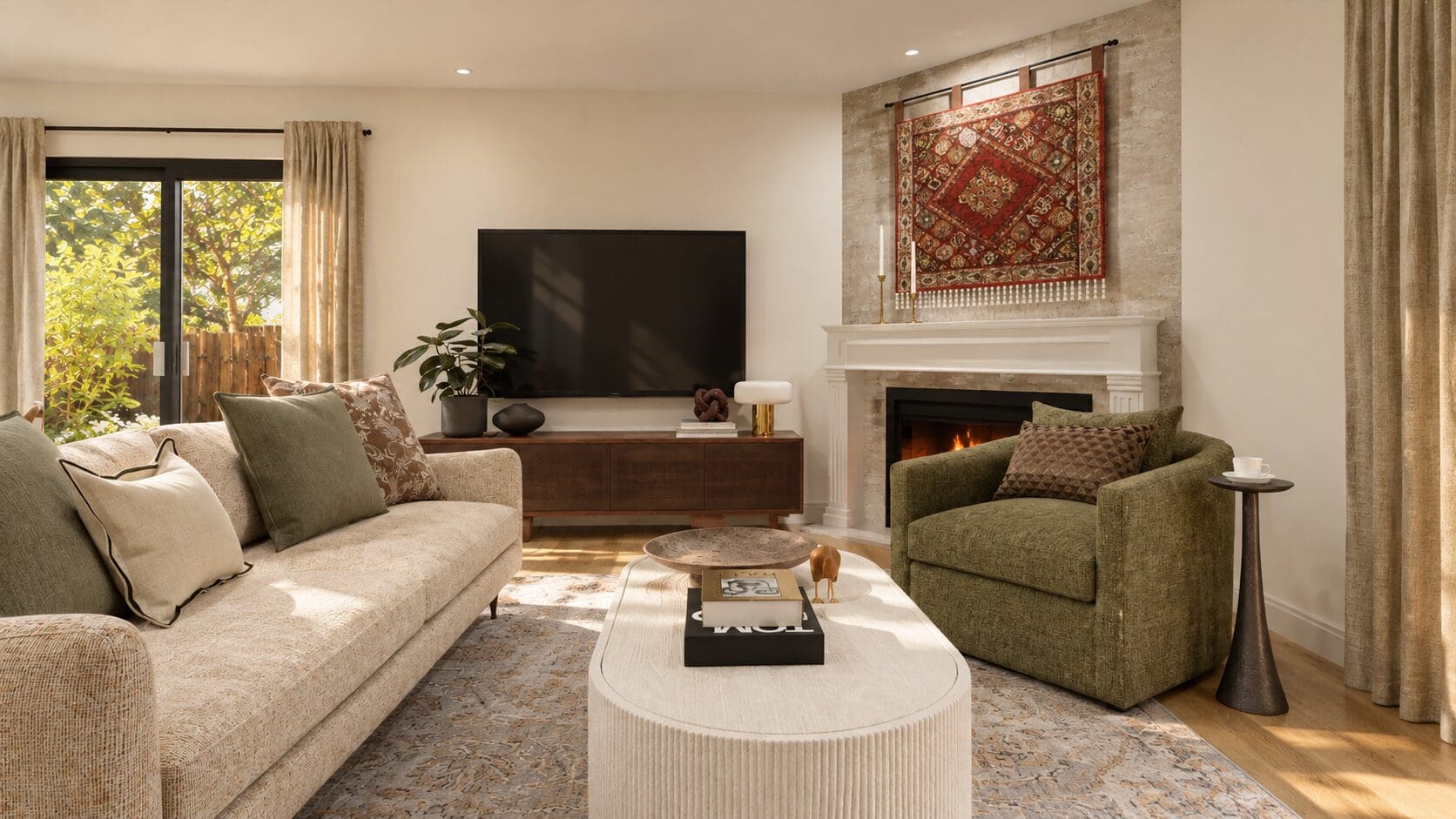
Love the look of a beautifully decorated home, but have a budget that says, “let’s be reasonable”? You can start with pieces you already have and give your space a little extra polish without replacing all your furniture.
Think of curtains that fit just right, a lamp that makes your favorite corner glow, or a great vintage find mixed in with everyday basics. These details give the room depth and personality—and make simple furnishings feel special.
If you’ve been wondering how to make your home look expensive on a budget, we’ve rounded up six ideas to get you started. Try one for a quick refresh or combine a few for a bigger change. There’s something here for a weekend of rearranging and for your next carefully planned purchase.
1. Let Your Favorite Pieces Shine.
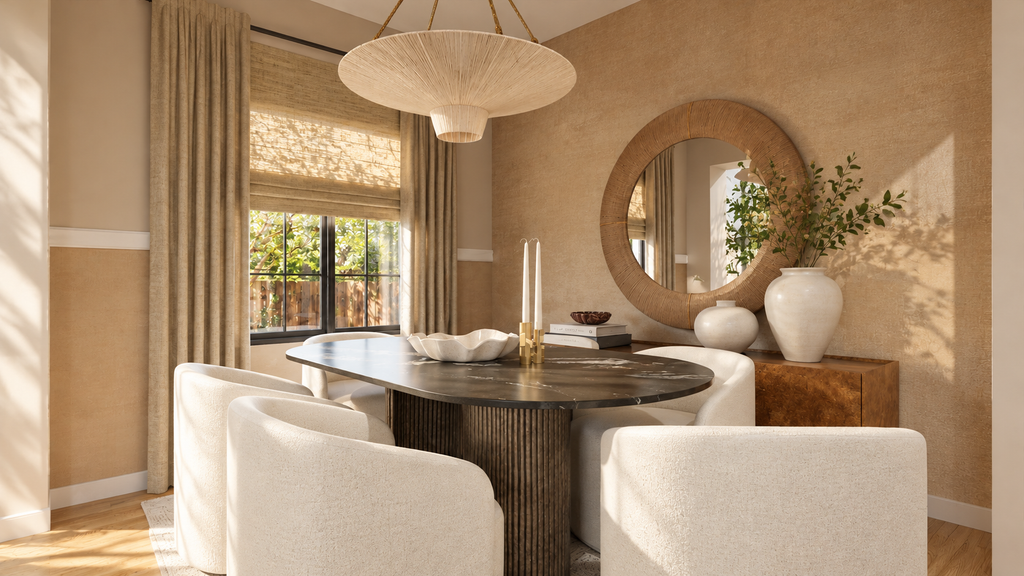
Take a look at your coffee table or bookshelves. Can you actually see the pieces you love, or are they getting lost among everything else? 👀
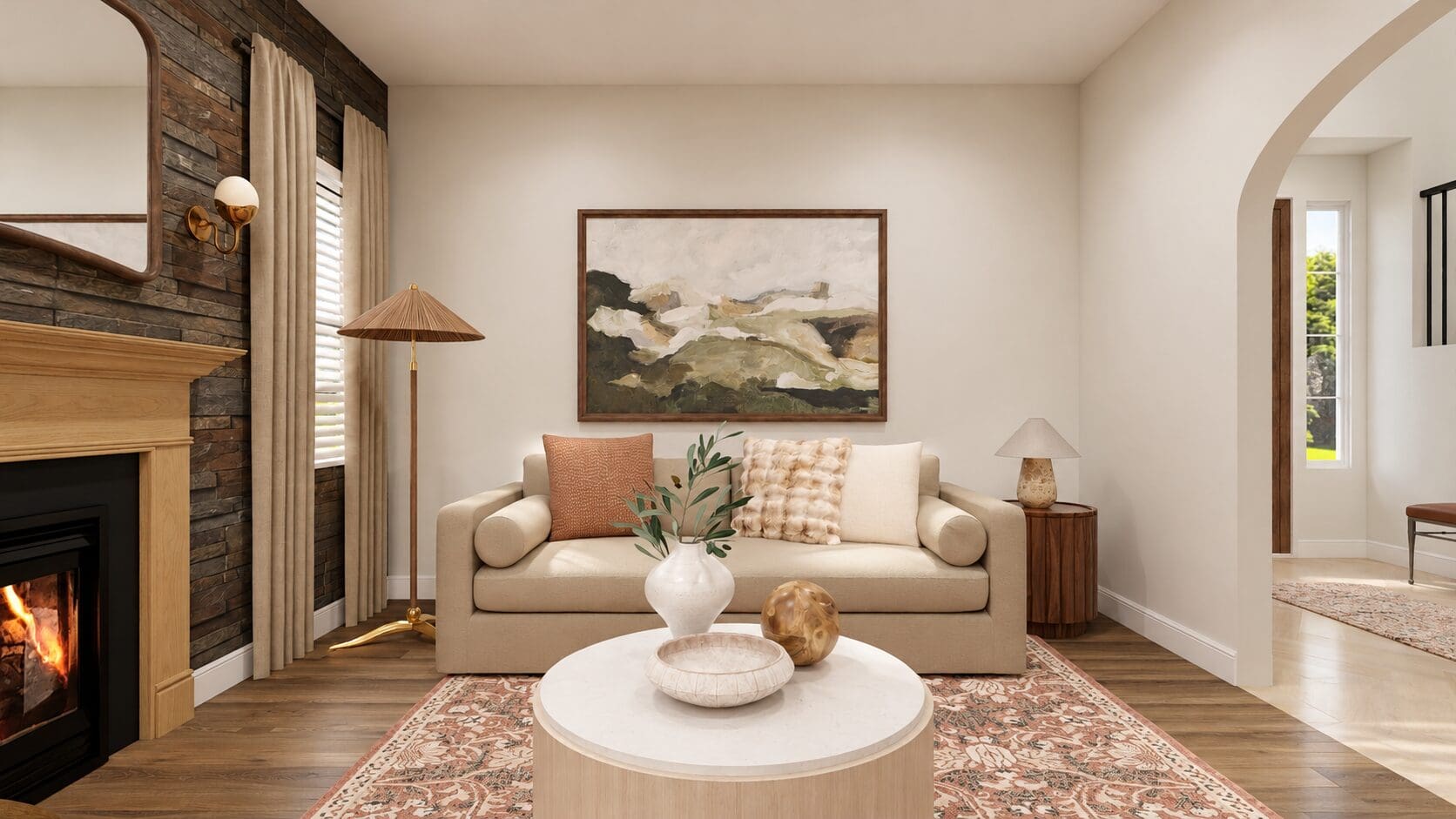
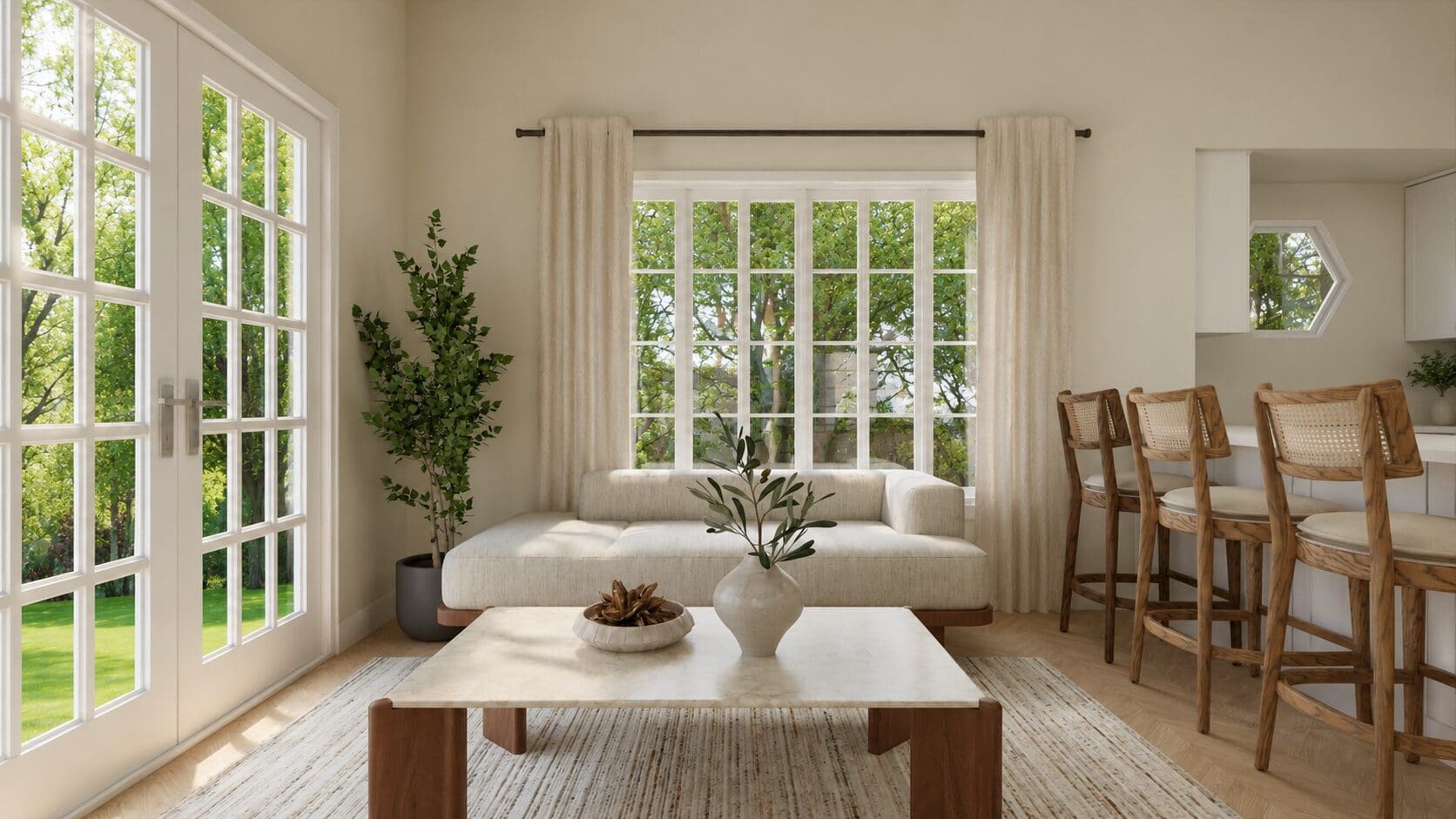
Try clearing one surface and bringing back just a few favorites. A stack of books, a ceramic bowl, and a small vase might be all your coffee table needs. Leave room for everyday life, too. Your morning coffee deserves a spot!
Before buying anything, move a few accessories between rooms. That bowl tucked away in the kitchen might look lovely on your entry console. It’s an easy, budget-friendly update that also helps you see what the room actually needs.
2. Bring Your Colors Together
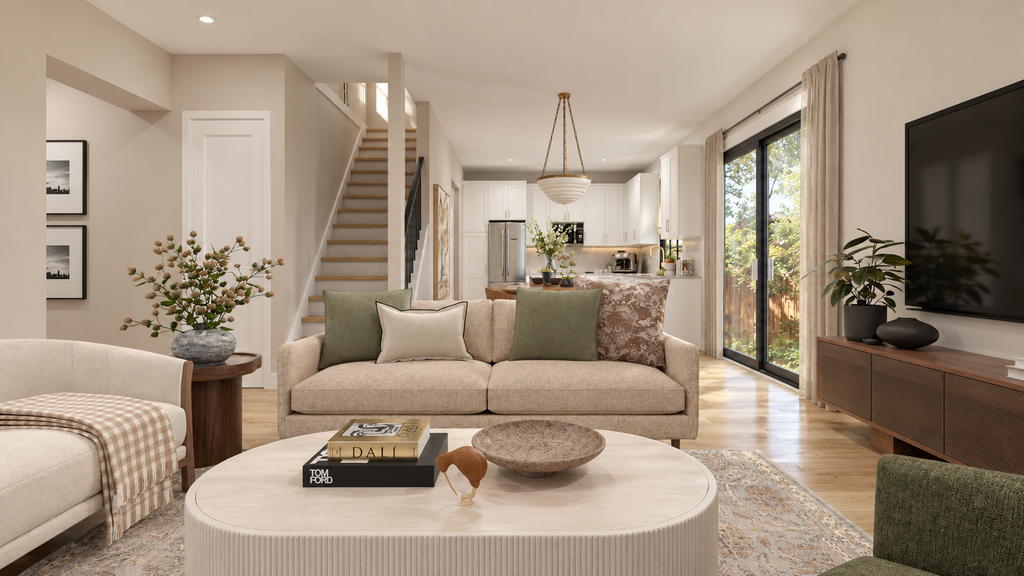
Ever notice how some rooms feel pulled together even when the furniture doesn’t match? Repeating a few colors helps create that connection.
Start with something you’re keeping, like your sofa, rug, or favorite artwork. Then carry a color from that piece into two or three other details. A little olive green in a pillow, a print, and a vase can give the whole room a shared thread. 🧵
No need to match every shade perfectly. A mix of lighter and deeper tones keeps things interesting—and makes shopping a little easier. You’ll have a clearer direction the next time a tempting throw pillow catches your eye.
3. Give Your Curtains A Little Attention
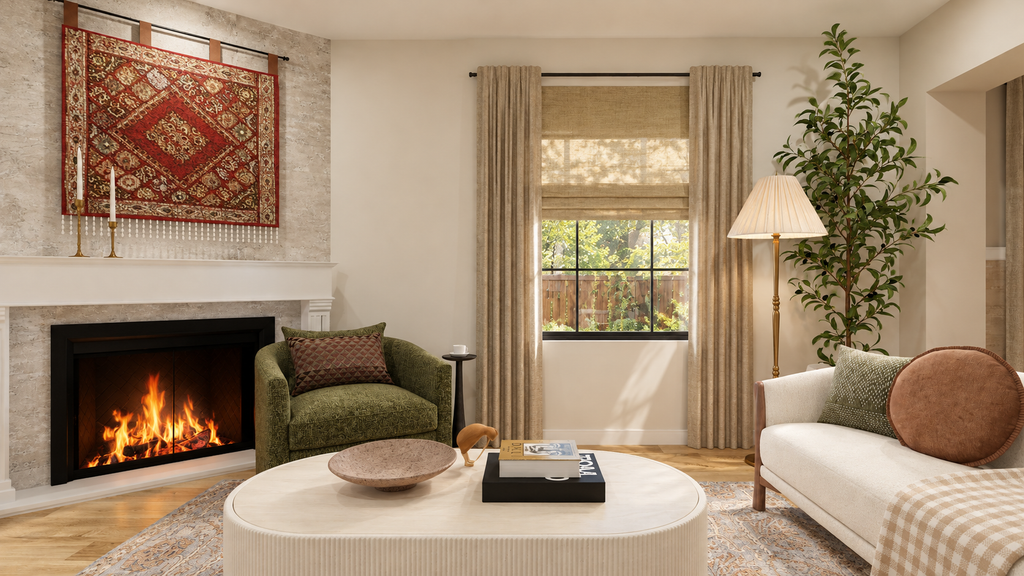
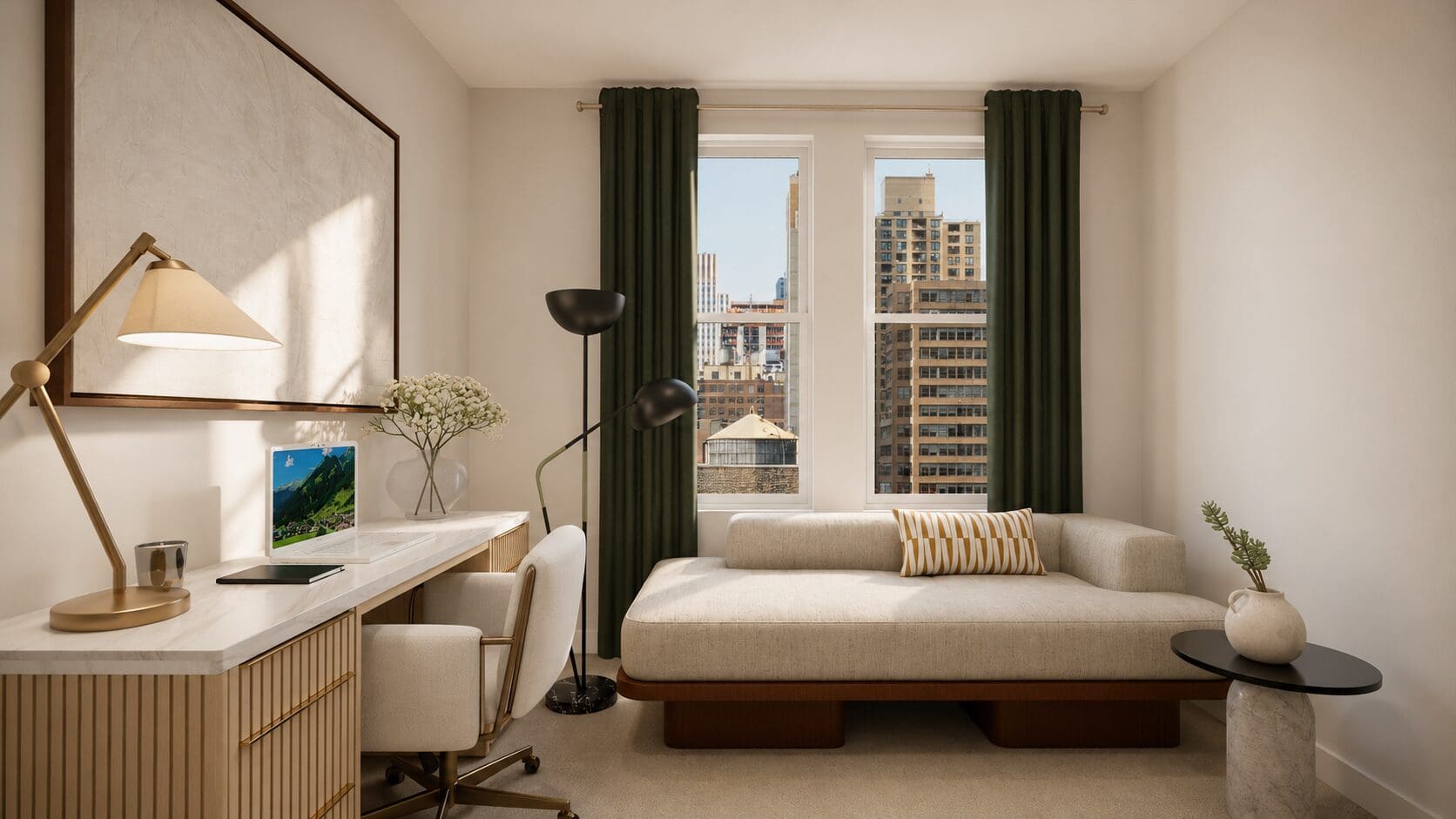
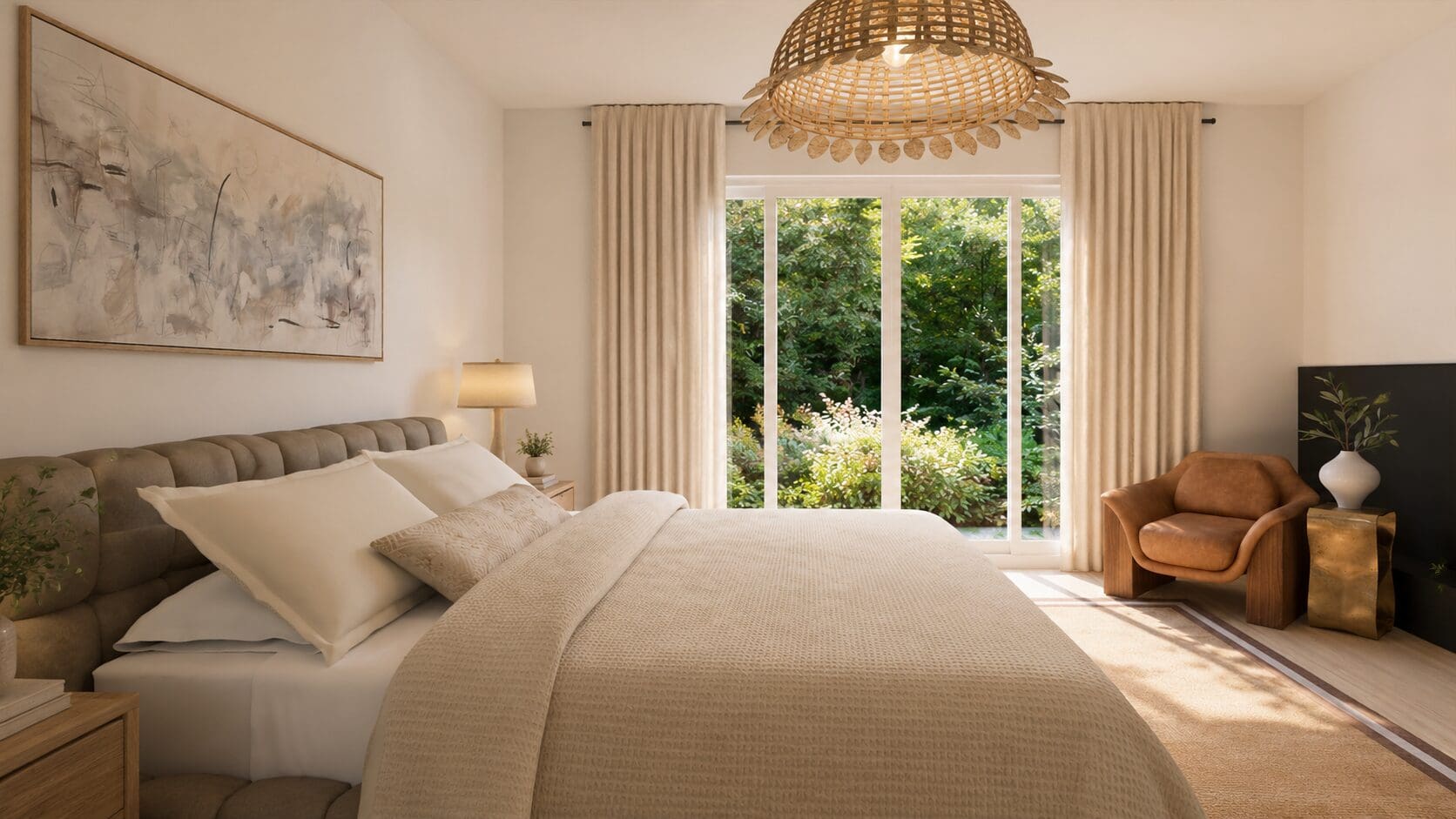
Soft, flowing curtains can make a room feel wonderfully finished. The trick is getting the length and fullness right, even when you’re buying off the shelf.
Measure from the actual hanging point, including any rings or hooks. For an easy everyday look, choose panels that just meet the floor or hover slightly above it. Where the space allows, extend the rod beyond the window so open curtains can sit mostly clear of the glass.
Add enough fabric for gentle folds, then hem and steam the panels. Yes, steaming counts as decorating! That little finishing touch helps affordable curtains feel much more considered.
Prefer a cleaner look? A well-fitted shade can be just as lovely. ✨
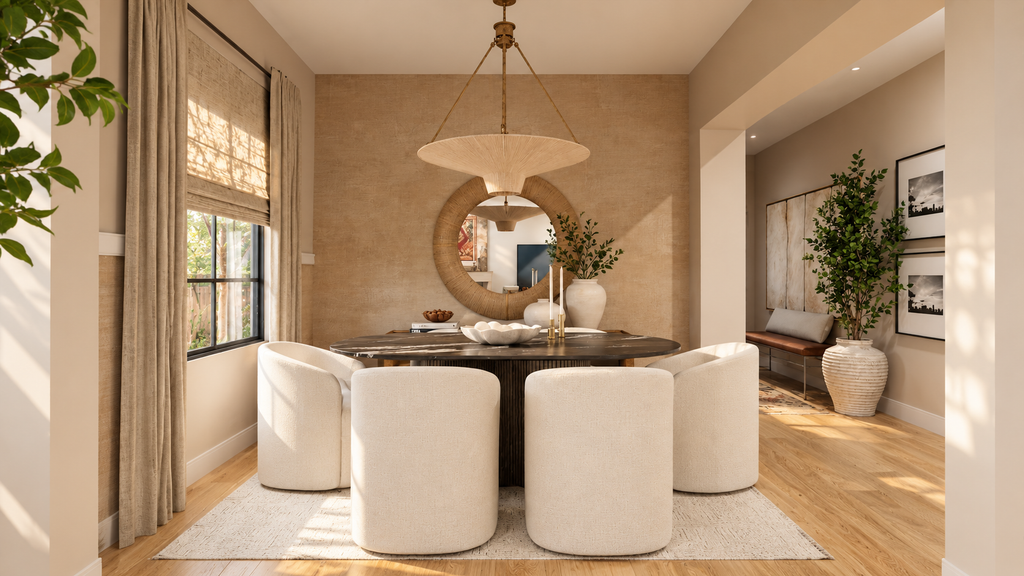
4. Make Room For A Beautiful Glow
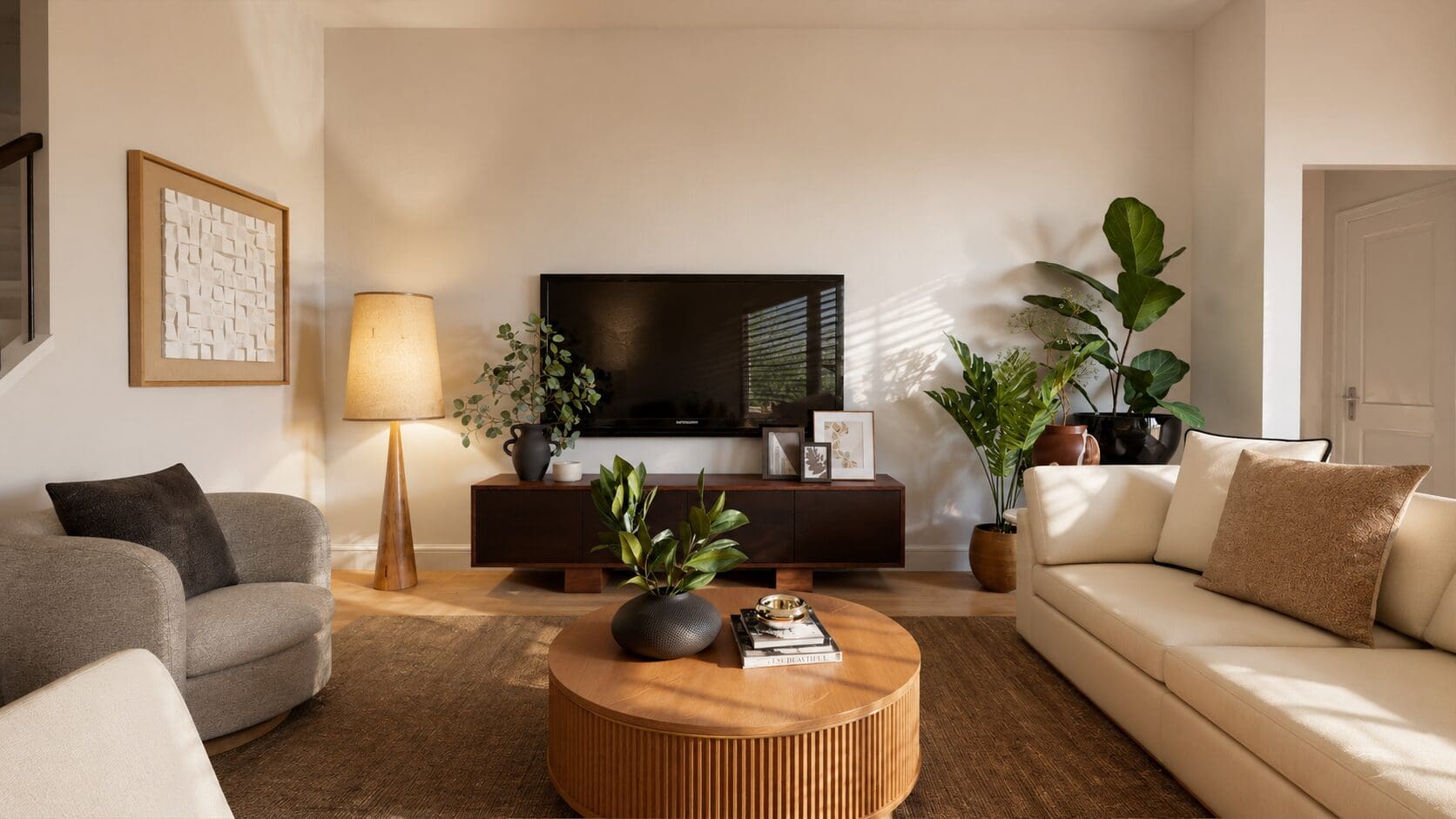
A table lamp can do a lot for a room. It adds shape during the day, brings a cozy glow at night, and makes an overlooked corner feel like somewhere you’d actually want to sit.
Want your living room to feel more inviting tonight? 😊
Try moving a lamp beside your sofa or adding one to a console. A floor lamp near a reading chair creates a useful little nook without taking up table space.
For cozy living room lighting, warm white bulbs around 2700K are a good starting point. Check how they look with your finishes and keep nearby bulbs similar in color. Sit down to make sure the light feels comfortable, and you aren’t looking straight into a bright bulb.
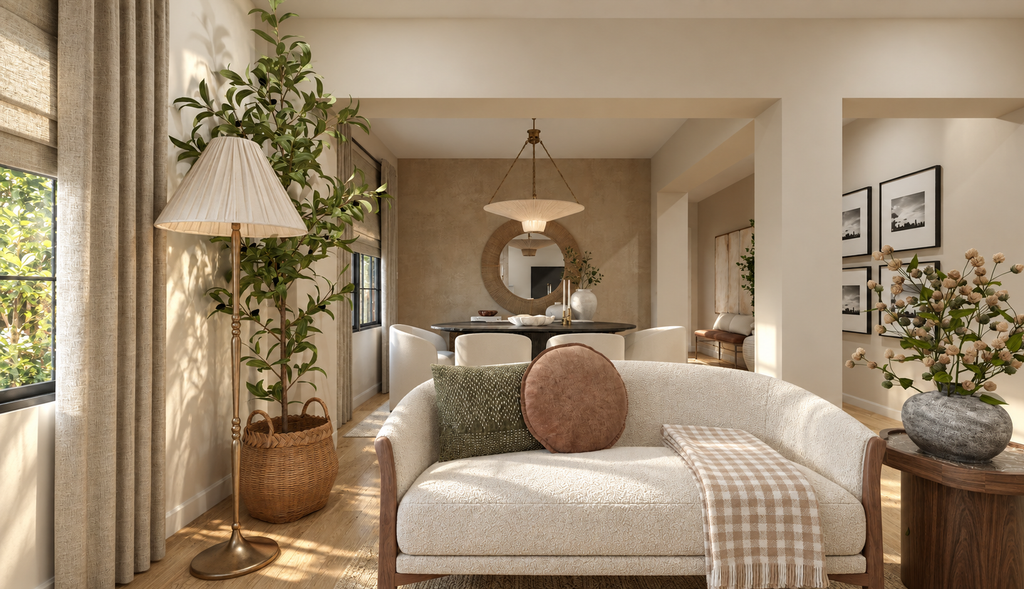
5. Turn Up The Texture
If your room feels a little flat, texture might be the missing ingredient.🧂A woven cushion against smooth upholstery or a matte ceramic bowl on a wood table gives your eye something new to enjoy.
You can keep the palette quiet and still create plenty of interest. Think cream cotton, a nubby throw, and a subtly patterned pillow on a neutral sofa. In a colorful room, calmer textures can help the bolder pieces stand out.
Choose materials that suit your everyday life. Washable covers and easy-care throws are especially handy if your sofa is also the family hangout. A polished room should still invite you to be comfortable.
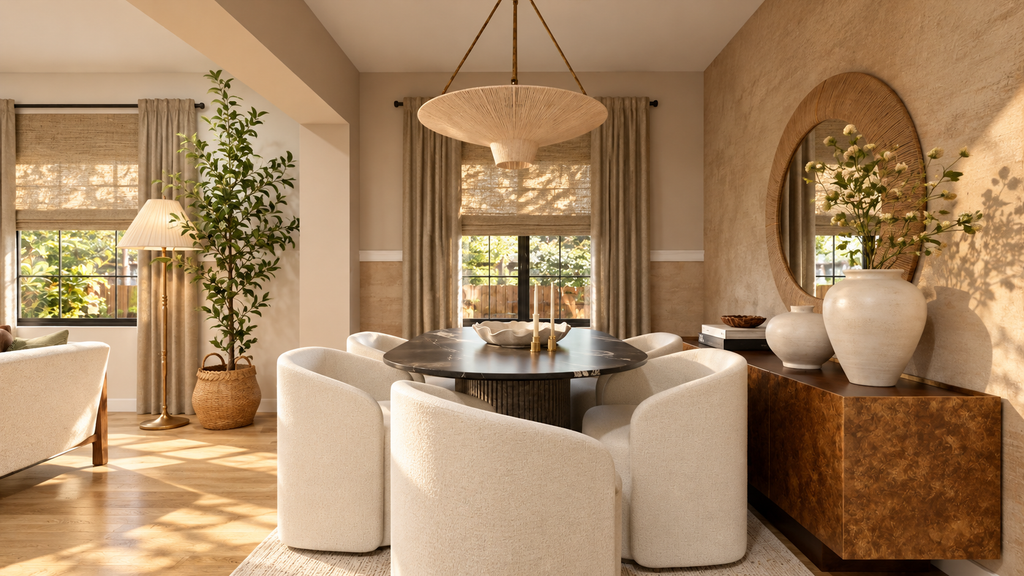
6. Spend Where It Will Make A Difference
Before you fill your cart with little accessories, step back and look at the room. What feels unfinished? 🤔
A rug that reaches beneath the front legs of your sofa might help everything feel connected. Longer curtains could finish a bare window wall, or a secondhand wood table might bring character to a room full of newer pieces.
Make your free adjustments first, then live with the room for a few days. You’ll have a better sense of where to spend and what you can happily keep, and before you feel the urge to buy, don’t forget to measure.
Learning how to decorate on a budget gets easier when each purchase has a purpose. Start with one small update, enjoy the difference, and build from there. Which of these ideas would you try first? Share it in the comments—I’d love to hear what you’re working on!
With Love Laura
/ make a comment /
Filed in :
PREVIOUS POST
NEXT POST
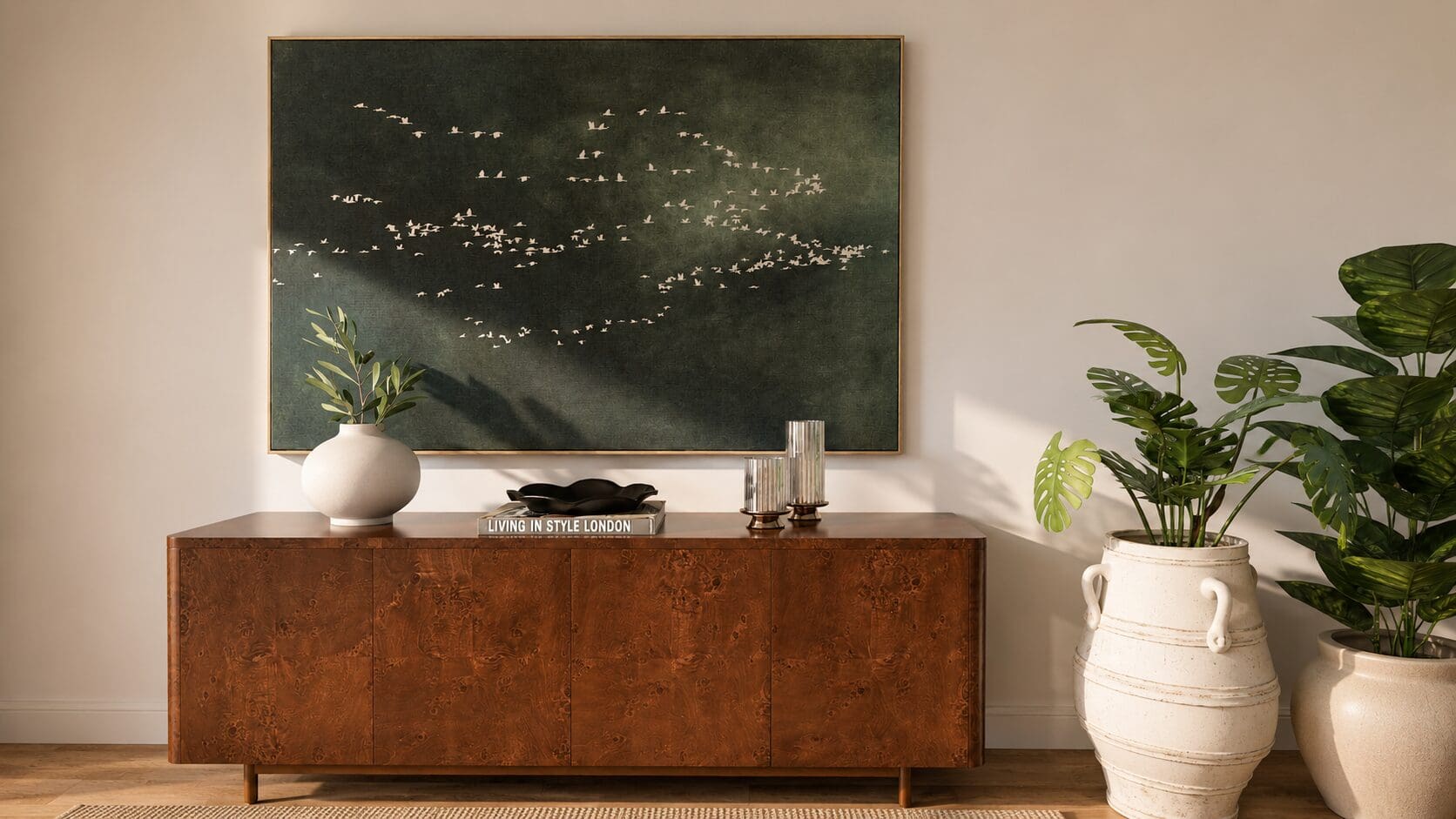
I THINK YOU'LL ALSO LOVE...

Your email address will not be published. Required fields are marked *
THANK YOU


